

Raising the price does not always improve the month. The useful rate is one that fits properties like yours, the nights you can actually sell and what remains after costs.
A national average is not your flat’s price
Spain’s National Statistics Institute (INE) published a provisional 2025 summary in February 2026: the Holiday Apartment Price Index rose 3.4% on average over the year for Spain as a whole. In the same release, overnight stays grew 5.9%.
These are two different indicators: one reflects prices, the other the volume of nights. The data is national for 2025, not the average price in Barcelona or the Maresme, nor for every property on booking platforms. It is context, not your listing’s rate. Source: INE.
Start with comparable listings
Choose listings in the same municipality, with similar capacity, a comparable setting and amenities close to yours. A studio for two and a three-bedroom flat do not compete for the same guest, even two streets apart.
Look at the total stay price, not the nightly rate alone. Cleaning, minimum nights and cancellation terms change what the guest pays. A cheap headline rate can cost more once the booking is complete.
Review your demand, not only others’
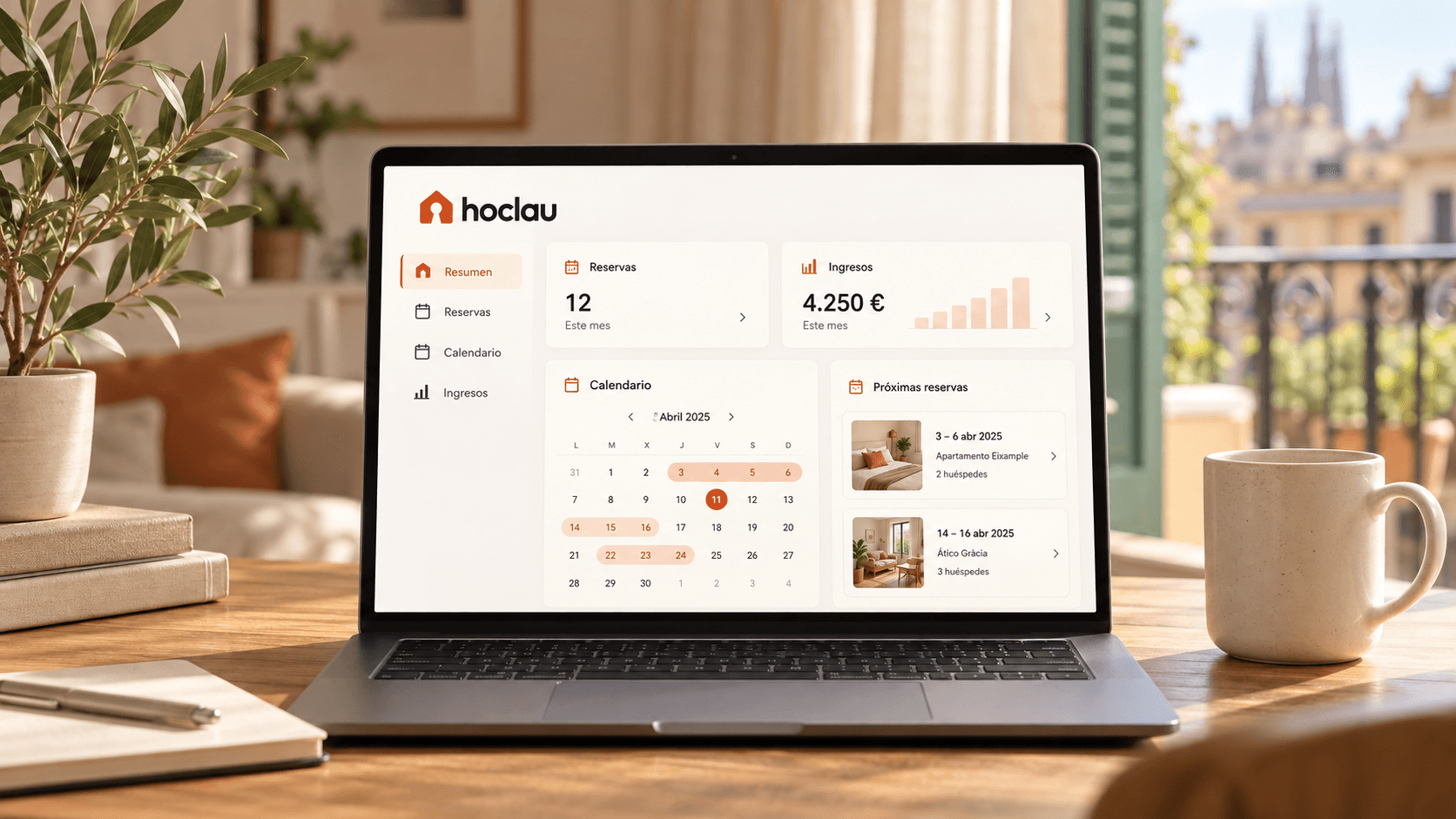
Note how many nights are sold, how far in advance and at what price. Split weekends, weekdays and busier periods. An annual average hides very different weeks.
If the calendar fills well in advance, you can try a slightly higher rate on those dates. If it stays open until the last minute, the price may be above what that week can support.
Adjust by date, not with one figure for the whole year
Bank holidays, summer, local events and quieter months do not behave the same. It makes sense to have a base price and move it with the calendar, always watching occupancy too.
If your property is in Mataró, Argentona or another Maresme municipality, look at the full year: peak season, shoulder months and quieter periods. From the outset, include days for your own use, maintenance or closure. Those gaps are not for sale. A calendar with three scenarios—cautious, central and favourable—helps you see whether the price holds for the year, not only August.
Monthly revenue matters more than the dearest night
Illustrative example, not a market result or a hoclau client outcome: 20 nights at €100 totals €2,000. Fifteen nights at €120 totals €1,800. The second rate is higher; the month is not.
When stays change, so do cleans and often commissions. Weigh revenue and occupancy together, then deduct operating costs. The right price is the one that sustains the month, not the one that looks best on the listing.
National news helps you ask better questions. The decision still belongs to your property, your area and your numbers.